The Bible & Quantum Mechanics
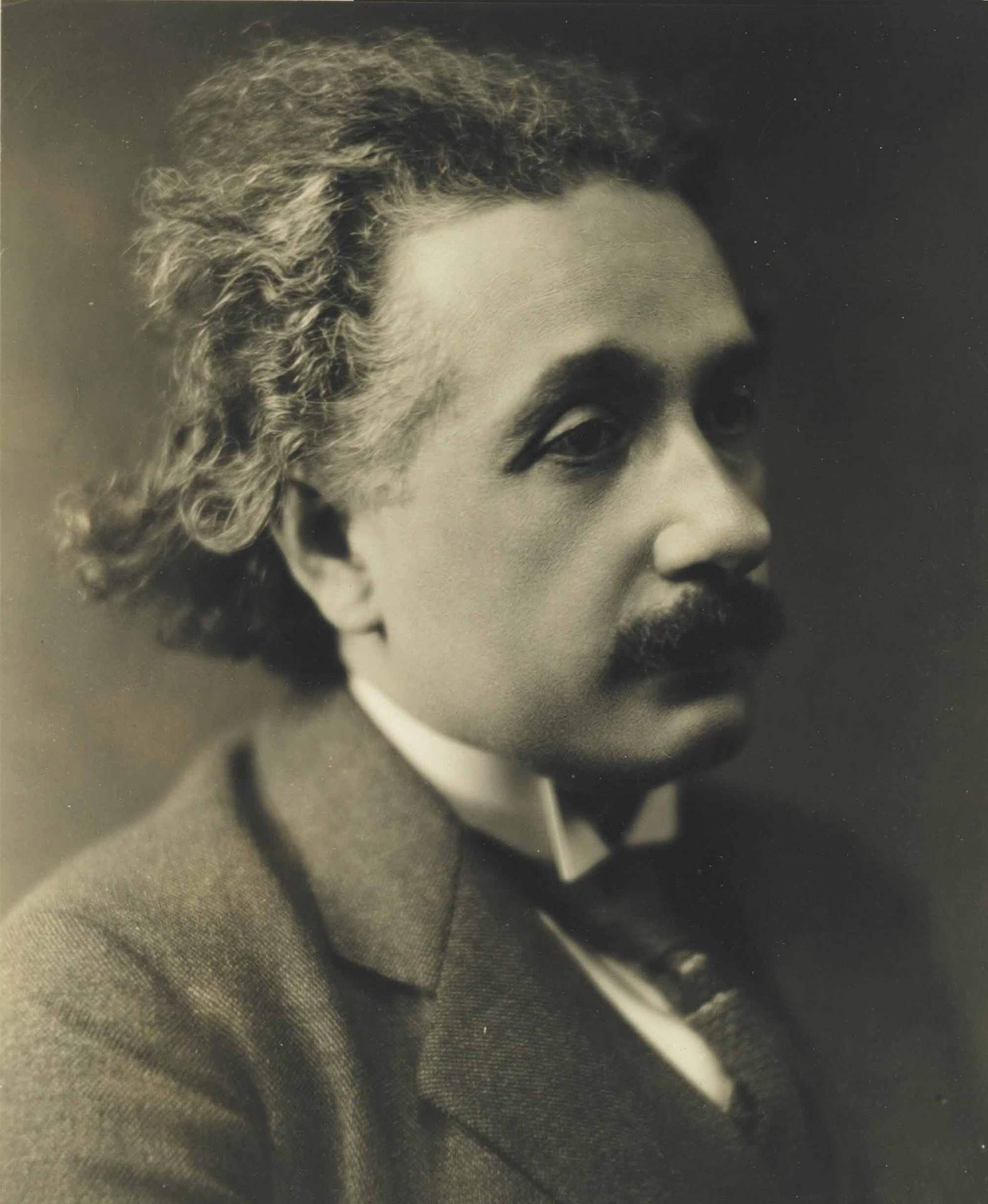
Question: ‘Scientific American’ said, “One of the more unsettling discoveries in the past half a century is that the universe is not locally real.” They point to the 2022 Nobel Prize in Physics, split between John Clauser, Alain Aspect and Anton Zeilinger whose experiments proved that particles do not have definite states until they are measured or observed. Does the biblical creation fit into this “observer effect” view of the universe?
Answer: The more scientists investigate quantum mechanics the more they prove its value.
We see a progression of scientists doing their job and taking our knowledge a little further with each step:
Isaac Newton changed our understanding of the universe by defining gravity as a universal force of attraction.
So too Benjamin Franklin helped formulate our understanding of electrical charge.
Albert Einstein developed the special and general theories of relativity and explained the photoelectric effect (for which he won the Nobel Prize). This laid the groundwork for quantum mechanics.
Niels Bohr developed the Bohr model of the atom, a foundational concept in quantum mechanics.
And with each step humankinds’ knowledge grew.
One of the latest discoveries is that the world around us needs an observer. The particles around us are “observer dependent”. The 2022 Nobel research proved that on a quantum level, particles do not have fixed properties until the moment they are measured. Before that, they exist in a "fuzzy" wave state of all possibilities at once.
Einstein disagreed and famously declared "God does not play dice"—he was deeply uncomfortable with the randomness and uncertainty inherent in quantum mechanics. In reply Niels Bohr said, "Einstein, don't tell God what to do".
While Einstein’s theories of relativity remain valid at the macro level, the 2022 Nobel Prize confirmed that Einstein’s "common sense" view of reality was incorrect.
The teaching of the Bible aligns with the idea that the universe is not locally real—For instance the Apostle Paul said, “So we fix our eyes not on what is seen, but on what is unseen, since what is seen is temporary, but what is unseen is eternal” (2 Cor 4:18). Let’s remember that Paul had some knowledge of this before the scientists got to work on the subject: “I know a man in Christ who fourteen years ago was caught up to the third heaven. Whether it was in the body or out of the body I do not know—God knows” (2 Cor 12:2). Paul uses the third person to describe this personal experience out of humility avoiding boasting about his own profound revelations. But his revelations were profound, pointing out "what is seen".
In physics, non-local reality suggests that objects do not have definite properties until they are measured or observed or "seen". We see Paul shares a similar view, indicating that the physical world is not the ultimate, independent reality that some people think it is.
Hebrews 11:3 also states, "By faith we understand that the universe was formed at God’s command, so that what is seen was not made out of what was visible." This directly supports the idea that the physical, "seen" world is derived from an invisible, "unseen" reality.
Quantum mechanics suggests that the observer plays a role in deciding the reality of a particle—"the observer effect”. The Bible posits that God is the ultimate, omnipresent Observer who sustains reality. In Genesis 1: The phrase "And God saw that it was good" is repeated throughout the creation narrative. This suggests that God's observation and approval are central to the stability and "goodness" of creation.
Colossians 1:17 states, "He is before all things, and in him all things hold together." This suggests that the universe does not hold itself together but is sustained at a deeper level by Christ.
So quantum mechanics seems to be the point where humankind’s knowledge presently lies. But if I could make a spiritual point here: Hebrews 11:1 defines faith as "the substance of things hoped for, the evidence of things not seen." This implies that faith acts as a "spiritual observation" that brings unseen, heavenly realities into our hearts. So faith is important for each of us to have.
This world may be temporary but there is a place where Jesus has gone to prepare a place for us and, as CS Lewis points out in ‘The Last Battle’, the final book in The Chronicles of Narnia, Aslan explains that the Narnia they had known previously was not the real one, but rather a "shadow" or "copy" of the true Narnia that exists in his own country.
Plato explained space-time by imagining himself standing with a group of people at the opening of a large cave. All the people had their backs to the light and were facing the rear wall of the cave. They could see their shadows cast upon the rear wall and the shadows of any trees or bushes that were close to the opening of the cave. If the people moved, their shadows would move. If they stood still, so would their shadows. They could see the rough outline of what everyone was doing but couldn’t see any detail; they couldn’t see what a person looked like. They could tell if a person was tall or small, fat or thin. They saw profiles but no detailed representation of reality. If, however a man facing the rear wall turned his head and looked around, he would see the objects making the shadows, he would see people, and outside he would see the big wide world. The Bible teaches something remarkably similar: “We look through a glass darkly” (1 Cor 13:12 KJV). “These are a shadow of things to come” (Col 2:17). We are told in the enigmatic Song Of Songs that someday the “Shadows will flee away” (Songs 2:17, 4:6).
Somehow, human consciousness seems to play a far higher role than we imagined in this temporary world that we presently reside in. Although it's worth saying that Quantum Mechanics is weird and there are a number of interpretations and it seems that you can pick which one you favour and nobody can prove you wrong.
Now some physicists point out that, the wavefunction collapses only when information about the path exists in the universe.
If a measuring device is placed at the slits in the double-slit experiment the wave becomes a particle, so maybe human consciousness isn't needed that way it was thought to be. If the universe contains information about which slit the particle went through, the wavefunction collapses. A human doesn’t need to read it. The mere availability of the information collapses the wave.
Yet, a measuring device doesn't exist without a consciousness creating it.
Some physicists dislike involving consciousness in quantum mechanics, and I understand that, because consciousness is not mathematically defined. There is no equation explaining how it interacts with quantum systems. And yet consciousness is the fundamental framework for all observation.
From a biblical perspective consciousness seems to highlight the importance of the human "heart" that Jesus spoke of. The heart seems to be central to what we see around us, not the other way round - The heart is the fixture not the particles around us. This gives an added meaning to Solomon's thought, “Keep thy heart with all diligence; for out of it are the issues of life” (Prov 4:23).
The infrastructure of this universe is the "ground" that God has deemed for us (our hearts) to inhabit - the framework for us to make decisions in, be they good or bad. We shall not always dwell in this locality. As Richard Baxter said, "This life is our infancy."
So it seems that at the quantum level the wavefunction is preferred mode of being in the universe. The interaction that creates a collapse always involves energy. So perhaps, (I'm just thinking out loud here) if the wavefunction was constantly in a collapsed state it would be like leaving the lights on in an uninhabited room. And there's no point in that.
Anyway, we thank God that we are allowed to explore the universe in such depth but it's important that humility remains a priority for us all and we say with David in Psalm 139:6, “Such knowledge is too wonderful for me, too lofty for me to attain.” However far we get along the road of human knowledge, God’s thoughts will always be far higher than ours.